
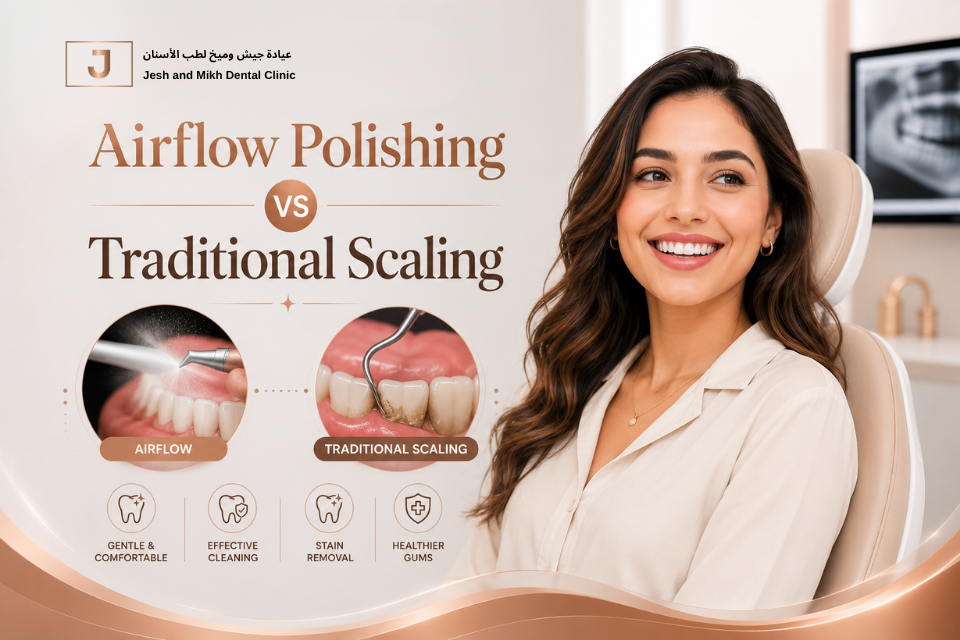
Airflow Polishing vs Traditional Scaling
Which Is Right for Sensitive Teeth in Dubai?
 Airflow Polishing vs Traditional Scaling, Which Is Gentler for Sensitive Teeth?
If the thought of your next dental cleaning makes you flinch, you are not alone. Tooth sensitivity is one of the most common reasons patients in Dubai delay routine hygiene appointments even when they know their gums and enamel need professional care. The good news is that modern dental hygiene has moved beyond the one size fits all approach. At our Al Karama clinic in Dubai, we offer both airflow polishing and traditional scaling, and often use them together for the best combination of comfort and results.
This guide explains how each method works, which one is gentler for sensitive teeth, and how our team decides which approach is right for you. If you have been putting off a professional clean because of past discomfort, this article is for you.
Quick Answer:
Airflow polishing is generally gentler than traditional scaling for sensitive teeth. It uses a fine stream of air, water, and cleaning powder instead of direct instrument contact, which means less pressure and less discomfort. However, for calcified tartar below the gum line, traditional scaling remains essential.
What Is Airflow Polishing?
Airflow polishing is a modern hygiene technique that uses a controlled spray of air, warm water, and fine cleaning powder to remove plaque, biofilm, and surface stains from your teeth. The spray is directed by the hygienist at a precise angle and pressure, so it lifts deposits off the tooth surface without any instrument touching your teeth directly.
The cleaning powder used in the airflow system is usually made from sodium bicarbonate or glycine. Both are much finer and gentler than the polishing pastes used in traditional cleanings, and they are safe for regular use even on sensitive teeth, exposed roots, and areas around braces or implants.
Because there is no metal on tooth contact and no vibration, patients often describe airflow polishing as feeling more like a soft rinse than a dental treatment. It reaches areas that traditional instruments struggle with, such as between crowded teeth, around orthodontic brackets, and inside deep gum pockets.
How Does Traditional Scaling Work?
Traditional scaling has been the foundation of dental hygiene for decades and for good reason. When tartar (also known as calculus) hardens onto the tooth surface, especially below the gum line, only physical instruments can remove it. There are two main forms of scaling:
*Hand scaling*
The hygienist uses fine hand held instruments called scalers and curettes to gently scrape hardened deposits from the tooth surface. This method is highly precise and lets the hygienist feel exactly what is being removed. However, because there is direct contact and controlled pressure on the tooth, patients with exposed roots or thin enamel can sometimes feel sensitivity during the process.
*Ultrasonic scaling*
This method uses a small vibrating tip that breaks apart tartar with high frequency vibrations, while a fine water spray keeps the tooth cool and washes away the debris. Ultrasonic scaling is faster and often more comfortable than hand scaling, though the vibration itself can occasionally trigger sensitivity in patients with very reactive teeth.
At our Al Karama clinic, both methods are available. The choice depends on where the tartar is located, how thick it is, and how sensitive your teeth are on the day of treatment.
 Airflow Polishing vs Traditional Scaling Side-by-Side Comparison
| Feature | Airflow Polishing | Traditional Scaling | |
|---|---|---|---|
| Best for | Plaque, biofilm, surface stains | Hardened tartar above and below gum line | |
| Instrument contact with tooth | None (spray-based) | Direct contact required | |
| Sensation | Cool spray, minimal pressure | Vibration or scraping | |
| Suitable for sensitive teeth | Yes usually well tolerated | May require desensitising measures | |
| Around implants and braces | Excellent reaches tight spaces | Effective but more time consuming | |
| Stain removal (coffee, tea, tobacco) | Highly effective | Effective with polishing paste | |
| Removes hardened tartar | No | Yes the primary method | |
| Session length | 20–30 minutes | 30–45 minutes |
Why Do Some Teeth Feel More Sensitive Than Others?
Sensitivity happens when the protective enamel wears down or when the gum line recedes, exposing the softer dentin layer underneath. Dentin contains microscopic tubes that lead directly to the nerve inside your tooth. When something cold, hot, or physical touches an exposed dentin surface, it can trigger a sharp, brief pain.
Common causes of sensitivity include gum recession, enamel erosion from acidic foods and drinks, aggressive brushing with a hard toothbrush, teeth grinding at night, and untreated cavities. Because airflow polishing avoids direct pressure and works at a controlled temperature, it typically causes less stimulation of exposed dentin than traditional scaling which is why so many sensitive patients prefer it as their first choice.
When Should You Book a Professional Hygiene Appointment?
Even the best home care routine cannot remove hardened tartar or reach every surface of every tooth. Signs that it is time for a professional cleaning include:
* Bleeding gums when you brush or floss
* Bad breath that does not improve with brushing
* Visible yellow or brown deposits at the gum line
* Teeth that feel rough on the back or between the surfaces
* It has been more than six months since your last cleaning
* Increased sensitivity when eating cold or sweet foods
If any of these sound familiar, our dental hygienists in Al Karama can assess your teeth and recommend the right cleaning approach for you often at your very first appointment.
How We Choose the Right Approach for Sensitive Teeth
At Jesh & Mikh, no two hygiene appointments are exactly the same. Before we start, our hygienist examines your teeth, checks your gum health, and asks about your comfort levels. From there, we typically recommend one of three approaches:
*Approach 1 — Airflow polishing alone*
Best for patients with mild plaque and surface staining, no hardened tartar, and moderate to high sensitivity. This is often the right choice for maintenance appointments between deeper cleanings.
*Approach 2 — Traditional scaling followed by airflow finishing*
The most common combination. Ultrasonic scaling removes any tartar first, and airflow polishing follows to clean surface stains and polish the teeth to a smooth finish. Comfort measures such as desensitizing gel or numbing can be added for patients with high sensitivity.
*Approach 3 — Deep scaling with sensitivity protocol*
For patients with heavier tartar buildup or early gum disease. We use topical anesthetics, adjust the water temperature, and pace the treatment across your comfort thresholds. This approach protects your gum health while keeping you comfortable throughout.
What to Expect After Your Cleaning
Most patients leave the clinic feeling that their teeth are smoother and cleaner than they have felt in months. Some brief sensitivity to cold air or drinks for 24 to 48 hours is normal especially if hardened tartar was removed from an area that was previously covered. This usually settles on its own.
To keep your teeth feeling comfortable and clean between visits:
* Use a soft-bristled toothbrush and gentle circular motions never scrub
* Switch to a toothpaste designed for sensitive teeth
* Avoid brushing immediately after acidic foods or drinks wait 30 minutes
* Floss or use interdental brushes daily to prevent new plaque buildup
* Book your next professional cleaning within 6 months
Dental Hygiene Cost in Dubai Transparent Pricing at Jesh & Mikh
| Service | Starting Price (AED) | |
|---|---|---|
| Scale and Polish (Standard Cleaning) | From AED 300 | |
| Airflow Polishing | From AED 450 | |
| Combined Scaling + Airflow Polish | From AED 600 | |
| Full Mouth Deep Cleaning (per session) | From AED 800 | |
| Sensitivity Desensitising Treatment | From AED 200 |
Why Patients in Dubai Choose Jesh & Mikh for Dental Hygiene
* Airflow polishing available as a standard hygiene option, not an added extra
* Experienced dental hygienists trained in sensitive-teeth care
* Same-day appointments and evening slots for working professionals
* Multilingual team Arabic, English, Hindi, Malayalam, Filipino
* Convenient Al Karama Dubai location with easy access from Bur Dubai, Downtown, and the airport
* Over 1,400 five-star Google reviews with a 4.8 rating
Frequently Asked Questions
Q1: Is airflow polishing safe for people with sensitive teeth?
Yes. Airflow polishing is one of the gentlest professional cleaning options available. The absence of direct instrument contact and vibration usually makes it more comfortable than traditional scaling. If you have very reactive teeth, mention it at booking so we can plan the right approach.
Q2: Can airflow polishing whiten my teeth?
Airflow polishing does not chemically whiten teeth, but it does remove surface stains from coffee, tea, red wine, and tobacco, so your teeth often look noticeably brighter after treatment. For deeper whitening, we recommend combining a hygiene visit with our professional teeth whitening service.
Q3: How often should I book a hygiene appointment?
Most adults benefit from a professional hygiene visit every 6 months. Patients with a history of gum disease, heavy tartar, smoking, or braces may need appointments every 3 to 4 months for the best results.
Q4: Will my dental insurance cover airflow polishing in Dubai?
Most dental insurance plans in Dubai cover routine hygiene appointments. Coverage for airflow polishing specifically depends on your provider. Our team can help you check your policy at the time of booking.
Q5: Does airflow polishing damage tooth enamel?
No. When performed by a trained dental hygienist, airflow polishing is safe and gentle on enamel. The powders used are specifically designed to be less abrasive than traditional polishing pastes.
Q6: I have not seen a hygienist in years. Will I be judged?
Never. Many of our patients come to us after long gaps, and our approach is completely non judgmental. We focus on getting you comfortable, cleaning what needs cleaning, and building a positive routine going forward.
Book Your Hygiene Appointment at Jesh & Mikh, Al Karama Dubai Whether you have sensitive teeth, are due for a maintenance cleaning, or are worried about early signs of gum disease, our hygiene team is here to help. We take extra care with sensitive patients and offer both airflow polishing and traditional scaling separately or in combination for the most comfortable, effective result